

An AWS Scaling Blueprint for Media Platforms That Cannot Go Down
When breaking news hits or a match turns dramatic, traffic doesn’t knock politely.
It floods in.
One moment, your platform is calm.
The next millions of users refresh, share, stream, and reload at once.
For media companies, downtime at this moment is not a technical issue.
It’s a credibility crisis.
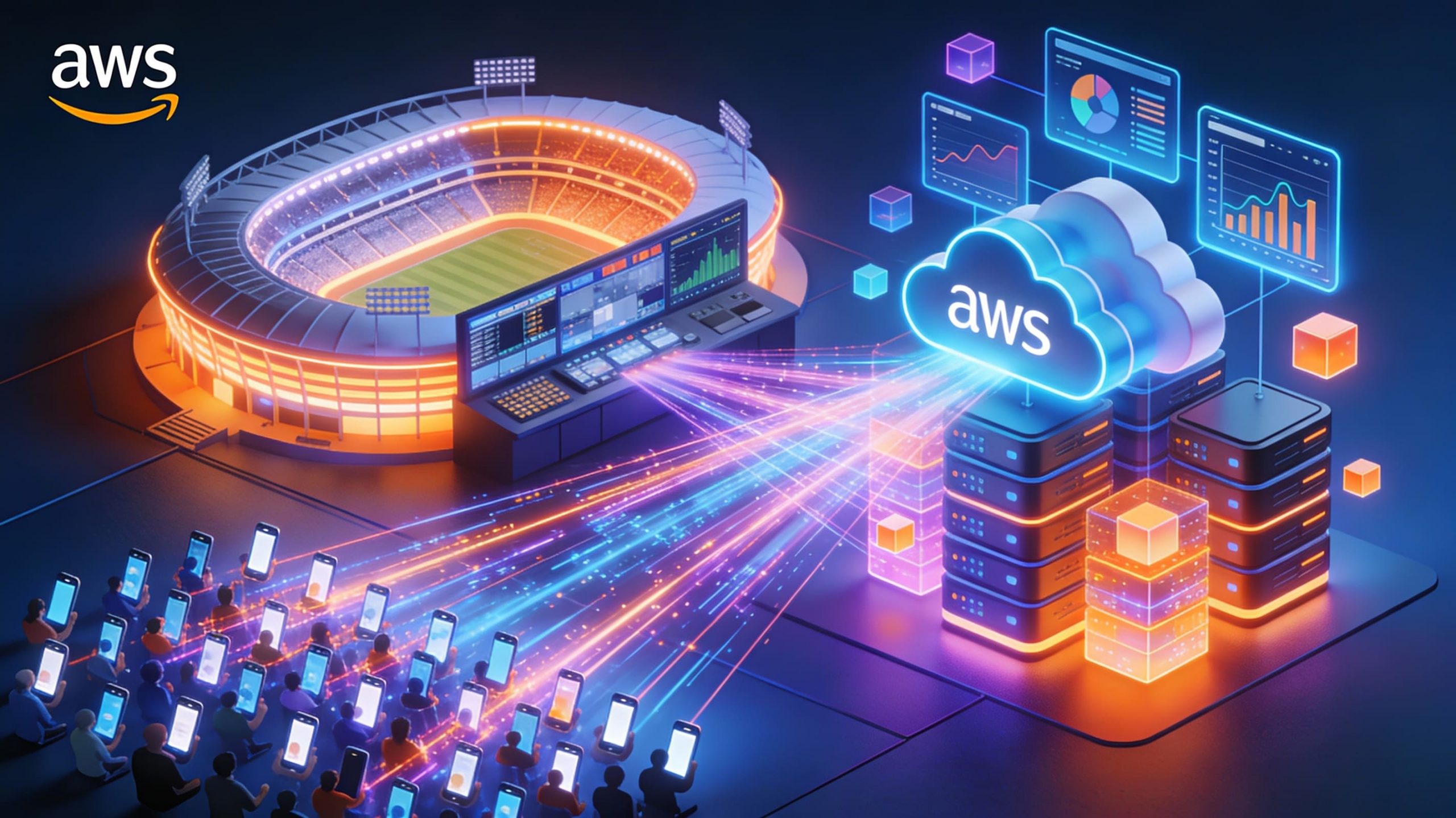
This is where AWS becomes less of a cloud and more of a shock absorber. Let’s walk through a proven AWS scaling blueprint designed specifically for breaking news portals, sports platforms, and content-heavy media websites.
Why Traffic Spikes Break Traditional Infrastructure
Before diving into solutions, it’s important to understand why traffic spikes hurt so badly.
During breaking news or match highlights:
- User behavior becomes unpredictable.
- Page refresh rates skyrocket.
- API calls multiply within seconds.
- Media assets like images and videos dominate bandwidth.
As a result, fixed infrastructure collapses under sudden load. Servers choke. Databases lock. Pages time out. Users leave.
However, AWS is built for exactly this kind of chaos.
The AWS Scaling Plan (Designed for Real-Time Surges)
1. Plan for Elasticity, Not Average Traffic
The initial rule is straightforward but frequently overlooked:
Never plan for regular days.
Rather:
- Traffic might increase tenfold or even a hundredfold in a matter of minutes, let’s say.
- Architectural systems that automatically extend and retract softly.
By enabling compute resources to expand and shrink in response to demand, AWS Auto Scaling guarantees consistent performance even as user volumes increase.
2. Frontload Traffic with Amazon CloudFront
During traffic spikes, every millisecond matters.
Amazon CloudFront acts as your global shield by:
- Caching content closer to users.
- Reducing load on origin servers.
- Delivering images, videos, and articles at lightning speed.
For breaking news and match highlights, this means users get instant access without overwhelming your backend.
3. Use Load Balancers Like Traffic Police
When millions arrive at once, traffic needs direction.
Elastic Load Balancers:
- Distribute incoming requests evenly.
- Detect unhealthy instances.
- Reroute traffic automatically.
As a result, no single server bears the full pressure. The system stays upright even under extreme load.
4. Decouple Systems to Avoid Chain Reactions
One slow component should never crash the entire platform.
AWS services like Amazon SQS and SNS help by:
- Decoupling front-end requests from backend processing.
- Buffering sudden spikes in events, comments, or notifications.
- Allowing services to process data independently.
This design prevents cascading failures during peak moments.
5. Make Databases Better for Lots of Reading
When there is breaking news, more people read, but fewer people write.
To manage this:
- Use Amazon RDS Read Replicas to help with reading tasks.
- Take advantage of Amazon DynamoDB for quick access patterns.
- Store frequently used data with Amazon ElastiCache.
This way, databases can keep working well even when millions of people are refreshing at the same time.
6. Cache Aggressively, Cache Intelligently
Caching is your silent hero.
By caching:
- Headlines
- Match scores
- Trending articles
You dramatically reduce backend load.
AWS caching layers ensure users receive fresh content without hammering core systems repeatedly.
7. Get ready for the spike before it occurs.
Traffic surges are seldom entirely unexpected.
Make schedules compatible. The days of the elections. Significant revelations.
They are all well-known beforehand.
With AWS, you may:
- Before peak events, pre-scale infrastructure.
- Use actual traffic models to conduct load tests.
- Use Amazon CloudWatch to monitor systems.
Preparation makes panic into regular execution.
Real Impact for Media Companies
When implemented correctly, this AWS scaling blueprint delivers:
- Zero downtime during peak events.
- Faster page loads across geographies.
- Stable streaming and media delivery.
- Higher user retention and engagement.
- Increased ad revenue during peak moments.
Most importantly, it protects your brand when visibility is at its highest.
Final Thoughts: Scaling Is Not Optional Anymore
In today’s media landscape, traffic spikes are not exceptions.
They are expectations.
If your platform cannot scale instantly, users will move on within seconds. However, with the right AWS architecture, traffic surges become opportunities rather than threats.
Because when the world is watching, your platform must stay standing.
Want Whizzy Geeks to Handle Traffic Spikes Without Downtime?
Whizzy Geeks helps media companies architect AWS solutions that handle breaking news surges, live match highlights, and viral moments without downtime. From auto scaling and load balancing to cost-optimized cloud design, we ensure your infrastructure scales instantly when audiences flood in. Whether you’re preparing for peak traffic or optimizing your existing AWS setup, we make your platform fast, resilient, and ready for every big moment.
Drop us an email at [email protected] for more information.