

Imagine this scenario: your business is streaming an important live event. A large audience, possibly in the millions, is watching. Interaction is high, advertising income is increasing, and everything is proceeding without a hitch.
Then out of nowhere. . . buffering starts occurring.
Viewers begin to leave. The chat fills up with dissatisfaction. The stream fails.
What went wrong?
Often, the cause isn’t inadequate infrastructure or sudden surges in traffic. It’s a distributed denial-of-service attack.
In the context of live streaming, just a couple of seconds of interruption can result in significant harm.
What is a DDoS Attack?
A Distributed Denial of Service (DDoS) attack occurs when malicious traffic floods a server, application, or network. Real users, therefore, have difficulty using the service or are completely unable to do so.
Think about this situation: picture a concert hall capable of holding 50,000 people. Your real audience wants to enter a show. Still, at the entrances, millions of fake attendees abruptly swarm at once. The security guards can’t tell who has permission to come in, which causes trouble.
This situation reflects how a DDoS attack affects your system.
For live streaming platforms, the effects are much worse since video transmission requires:
- Small Delay.
- Important Bandwidth.
- Reliability of Service.
- Instantaneous Content Sharing.
Without these elements, the watching experience quickly degrades.
Why Are Live Streams a Major Target?
Live streaming has emerged as a highly appealing target for cybercriminals. What is the reason? The disruption leads to immediate attention and significant harm.
Cyber attackers frequently focus on:
- Sports Broadcasts
- OTT Platforms
- Esports Events
- Product Unveilings
- News Broadcasts
- Live Music Performances and Gatherings
The timing is deliberate.
Streaming platforms differ from conventional websites, as they cannot “recover later. ” Once the live event concludes, it is lost permanently.
As a result, organizations encounter various threats:
Loss of Revenue
Each minute that services are down can result in decreased subscriptions, advertising income, sponsorship revenue, and sales from transactions.
Damage to Brand Reputation
Users keep in mind negative streaming experiences. Frequent buffering or outages quickly erode trust.
Increased Customer Turnover
Viewers have limitless options. If your service fails, changing platforms takes mere seconds.
Operational Pressure
During an attack, technical teams must enter crisis mode instead of concentrating on the event at hand.
Taking preventative measures is much more effective than dealing with crises.
The Challenge: Good Traffic vs Bad Traffic
Here’s where things get tricky.
Live streams naturally attract traffic spikes. A successful event may bring 10x or even 100x normal traffic.
Now imagine malicious traffic arriving at the same time.
The challenge becomes distinguishing between:
- Genuine viewers joining the stream.
- Bots are attempting to overwhelm the infrastructure.
That’s where conventional firewalls often struggle.
They can block known threats, yes. But modern DDoS attacks are larger, smarter, and more dynamic.
You need specialized protection.
Enter AWS Shield.
This is when AWS Shield makes a significant difference.
AWS Shield is a managed DDoS protection solution created by Amazon Web Services to protect apps running on AWS.
Its work is uncomplicated.
- Detect attacks early.
- Absorb harmful traffic.
- Maintain the online status of your applications.
To put it another way, AWS Shield serves as a skilled security team that protects your infrastructure from attackers.
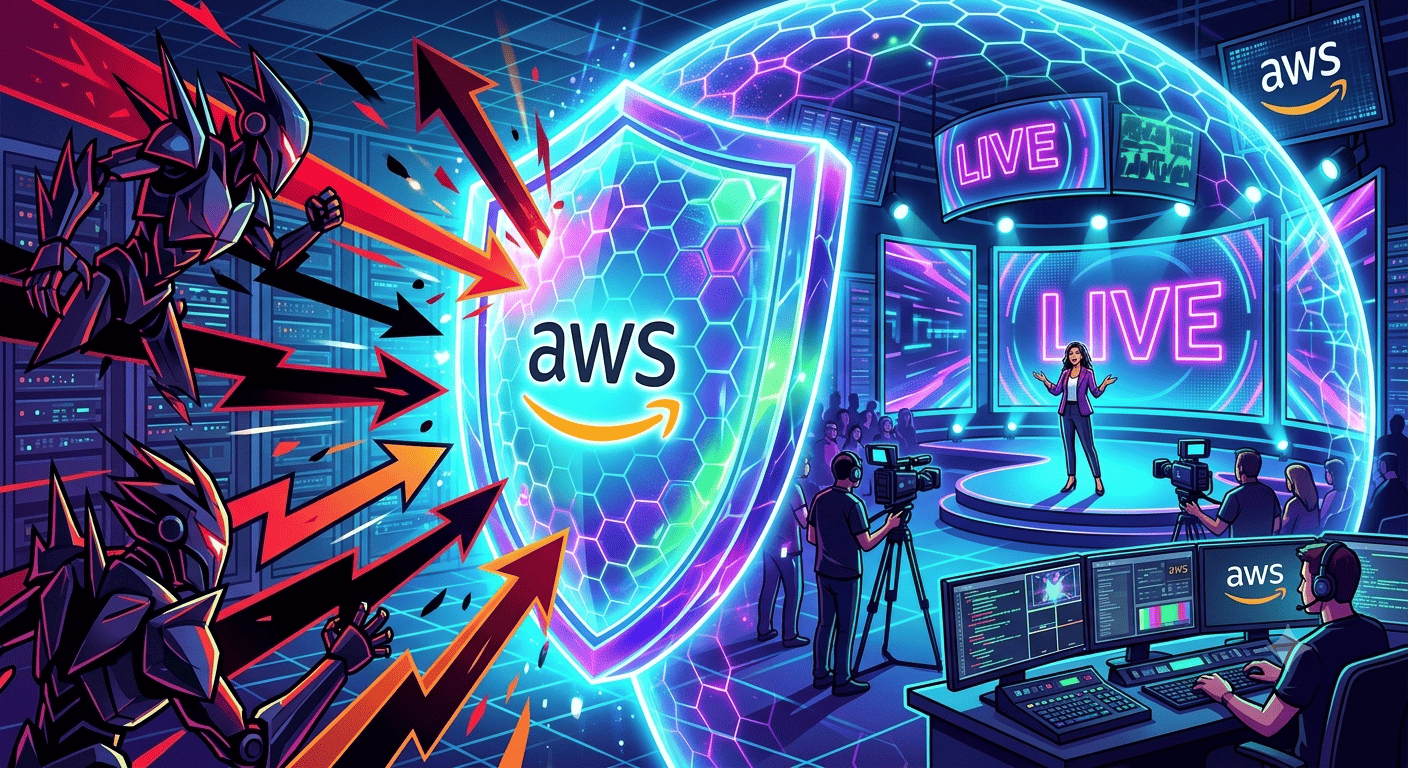
How AWS Shield Defends Live Streaming Sites
1. Always – On Detection
Traffic trends are constantly tracked by AWS Shield.
Mitigation starts the second abnormal behavior is automatically detected.
The reason this is important is that DDoS attacks frequently worsen in seconds rather than hours.
Before users become aware, AWS Shield reduces disruption by answering immediately.
2. Automated Traffic Reduction
AWS Shield neutralizes and filters out harmful traffic rather than letting it reach your origin servers.
Consequently:
- The amount of network traffic declines.
- Server overload is averted.
- Remaining genuine viewers stay linked.
Your broadcast continues to run while aggressors waste their resources.
That is a win.
3. Protection against large-scale attacks
Today’s attacks can reach terabits per second.
The scale may overwhelm conventional on-premises infrastructure.
Thankfully, AWS runs one of the biggest cloud networks in the world. Because of this enormous scale, AWS Shield can sustain enormous attack quantities without giving in under duress.
Simply said, scale serves as your protection.
4. Smooth Interface with AWS Services
Especially effective with AWS Shield are:
- Amazon CloudFront
- Elastic Load Balancer (ELB)
- Amazon Route 53
- AWS WAF (Web Application Firewall)
These services work together to offer stratified security.
Consider castle defense:
- Moat
- Walls
- Watchmen
- Guard Towers
One layer of defense assists. Much more durable are several layers.
5. AWS Shield Advanced: Advanced Protection
Extra security is provided by AWS Shield Advanced for companies that conduct live events that are vital to their operations.
Key advantages are as follows:
- Improved Identification.
- Real-Time Transparency.
- Protection from growing charges during attacks.
- AWS DDoS Response Team (DRT) provides 24/7 access.
The last point is important.
Professional assistance might be invaluable when millions of people are watching.
Real-Life Example
Think about an OTT service displaying the championship game.
In minutes, traffic jumps 20 times. A volumetric DDoS assault floods the service at once by attackers.
Without safeguards:
- Video Buffers
- Failure in Logging In
- Sometimes API Services Stop Working.
- The performance of CDNs falls off.
The event becomes disastrous.
Using AWS Shield,
- Finding packets that are bad,
- Traffic filtering,
- Authentic viewers continue to stream,
The viewers keep watching. The program goes on. Just as it should be.
Why Media Companies Need DDoS Protection Now
Cyberattacks are no longer rare events reserved for giant enterprises.
Today, attackers target businesses of every size.
If you operate:
- OTT Platforms
- Media Streaming Apps
- Live Event Platforms
- Video Delivery Infrastructure
Security cannot be optional.
In fact, as audience expectations rise, downtime becomes increasingly expensive.
Users expect instant access and flawless streaming.
Anything less feels broken.
Final Thoughts
Streaming live events is thrilling, dynamic, and extremely competitive.
Nevertheless, it also presents significant security challenges.
A DDoS assault has the potential to transform your most significant occasion into a major disaster within moments. This is why having preventative measures is crucial.
AWS Shield assists businesses in safeguarding themselves against extensive attacks, ensuring connectivity, and preserving the audience’s experience during critical times.
In live broadcasting, there are no opportunities for retakes.
When filming is in progress and countless viewers are tuning in, your system must operate without any issues.
With AWS Shield implemented, you can concentrate on providing an exceptional experience. And allow the event to proceed without interruptions.
Want Whizzy Geeks to secure your streaming infrastructure against DDoS attacks?
Is your streaming platform prepared for the next cyberattack? Don’t wait for downtime to expose security gaps.
Secure your live streaming infrastructure with AWS-powered DDoS protection and keep every broadcast uninterrupted.
Connect with Whizzy Geeks an AWS Advanced Tier Partner, to build secure, scalable, and resilient cloud architectures powered by AWS.
Drop us an email at [email protected] for more information.